Some of it's a little unsettling. Toward the back (page 35 and following), there are suggested canned answers to be given to media questions regarding any accident. Even before the accident happens, already they've got the canned responses! Here they are:
Anticipated "Top 10" Questions by the Media
Q1 Has the Oregon International Airshow - Hillsboro ever had a fatality?
A1 The Oregon International Airshow - Hillsboro has never had a fatality, either involving a pilot, or a spectator.
We have been conducting this airshow since 1988: the first 15 years were as a Portland Rose Festival Event, and this is the second year as the Oregon International Airshow - Hillsboro.
Q2 Why are there so many accidents at airshows?
A2 Any fatal accident is a tragedy, and this accident is no exception; but the fact is that airshow accidents are relatively infrequent. Because they are often dramatic and are nearly always captured on videotape, the accidents receive widespread publicity. But, in fact, there are typically three or four airshow accidents per year in the United States and Canada.
Q3 Isn't it just a matter of time before somebody from the audience is involved in an airshow accident?
A3 No. Because of the rules and regulations in place in the United States, it is highly unlikely that spectators will ever be involved in an airshow aircraft accident. Since current regulations were put into effect in 1952, there has never been a spectator fatality in an airshow aircraft accident. That's a safety record that is the envy of the entire motorsports industry.
Q4 What safeguards are in place to protect spectators?
A4 Spectator safety at airshows depends on four elements of a very effective safety program:
First, every pilot performing aerobatics at a U.S. or Canadian airshow must be evaluated each year by a certified aerobatics evaluator.
Second, airshow performers - both civilian and military - are prohibited from performing maneuvers that direct the energy of their aircraft toward the area in which spectators are sitting.
Third, the industry and regulatory authorities strictly enforce minimum set-back distances that were developed to ensure that, in the event of an accident, piece of the aircraft cannot end up in the spectator area.
And fourth, there is an invisible aerobatic box in which all aerobatics must be flown. Regulations prohibit anybody but necessary personnel from being in that box. If the box falls on top of a road, then the road must be closed during the airshow. If an office building is within the box, then the building must be vacated during the show.
Q5 Shouldn't somebody do something to stop these airshow pilots from killing themselves?
A5 There are a number of safeguards in place to ensure that airshow pilots are qualified and experienced, but, despite these rules and the close attention paid to safety issues, accidents sometimes happen. Accidents happen in car racing. Accidents happen in thoroughbred horse racing. Accidents happen in high school football games. And accidents happen in the airshow business. The pilots who perform at airshows understand the inherent risks of airshow flying. They do everything they can to minimize that danger.
Q6 Why did the crash/fire/rescue personnel take so long to respond?
A6 In an accident situation like the one we had today, it's not unusual for people to perceive the response time as being longer than actually was. But, based on our initial investigation, it appears that the emergency response was timely and professional.
Q7 Was there anything that show organizers could have done differently to avoid this accident?
A7 Each year, with or without an accident, we review our safety plan and our emergency response plan and make adjustments, additions and changes. And, following this accident, we will go through that process again. But, based on what we know right now, we wouldn't change a thing in our safety or emergency response plans. Our systems and our people appear to have performed exactly as they were supposed to perform.
Q8 Why did show organizers decide to continue the show? Or why did show organizers decide to cancel the rest of the show?
A8 Show management met immediately following the accident and, as part of a pre-arranged process, we discussed the relative advantages and disadvantages of continuing the show. After close consultation with regulatory officials and the performers, we made a decision to go ahead with (or cancel) the remainder of the show. Individual decisions on whether or not to perform were left with the individual pilots, along with the show management's assurances that we recognized this as a highly personal and emotional decision.
Q9 How many airshow accidents are there each year, we just heard about the one in the Ukraine not that long ago?
A9 As you would expect, this varies considerably. In some years, the industry has one or two accidents. In other years, it might have three, four or five.
Q10 What government organization is responsible for airshow regulation?
A10 The Federal Aviation Administration develops and enforces airshow regulations in the United States. The FAA has representatives on-site at the show today.
And one extra:
Q11 Will you hold the show again next year?
A11 It's too early to answer that question. Show management will be meeting on a number of issues during the coming days and weeks. Among the issues we will discuss will be the future of the show.
The necessary materials for the Airshow Office Conference Room, should an incident occur:
FAX
Phones (4)
Laptops (3)
Copier
Easel
Printer
All Media Lists
Airshow Map
Television
Radio
VCR
Airshow letterhead (for all press releases)
In the event of an incident, all news releases shall drop the names of sponsors involved and refer to "this weekend's airshow at the Hillsboro Airport."
Also check out page 32, describing "Scenario D" - "A plane goes down off site and hits a nearby house." Chilling.
This was taken from the site of an outfit called the International Council of Air Shows, Inc., a promoter of these spectacles.


 Them fast-dealin' Trail Blazers have
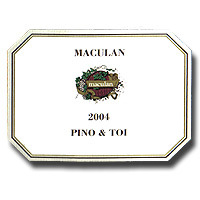
  I left out two details. First of all, the Mateus bottle made an excellent candle holder, particularly after it had been used for several different candles and had all sorts of drippings down its side. The Italian restaurants used to do the same thing with those cheesy chianti bottles that came with a basket around them, but for a teenybopper crash pad, only Mateus would do. (O.k., maybe Lancers, which was the equivalent of Mateus, but just those two.)


 At that time, at least as I recall, the pink "stuff" was pretty awful. The makers of large-batch wine used to pump out something caled white zinfandel, and it wasn't so hot. If you were stuck with a rose', your best bet might have been to opt for a Portuguese version put out by an outfit called Mateus. No vintage, not even the grape was identified, just "Mateus." I slugged down a fair amount of it one year as an


 The newest commissioner of the Portland Development Commission is
  On the down side, he's got serious political connections and gets himself appointed to all sorts of boards. He was on city Commissioner
 Ten years ago, when I moved into Portland's Buckman neighborhood, I was aghast at how dangerous it was to cross Hawthorne Boulevard as it traversed the avenues numbered in the 20's, 30's and 40's. You took your life into your hands. The traffic was way too fast, and the drivers drove with blinders on. Trying to get from, say, the Cat's Meow on the south side to Noah's Bagels on the north was a death-defying act. I saw many a close call, heard many a screech of slammed-on brakes.
 The guys who want to build a huge hotel near the white elephant Oregon Convention Center -- and who want Portland taxpayers to pay for most of it -- are testing the portability of their proposal. Now that the Portland Development Commission, under Mayor Potter's appointees, is apparently turning a cold shoulder to the massive taxpayer subsidies that it would take to make this